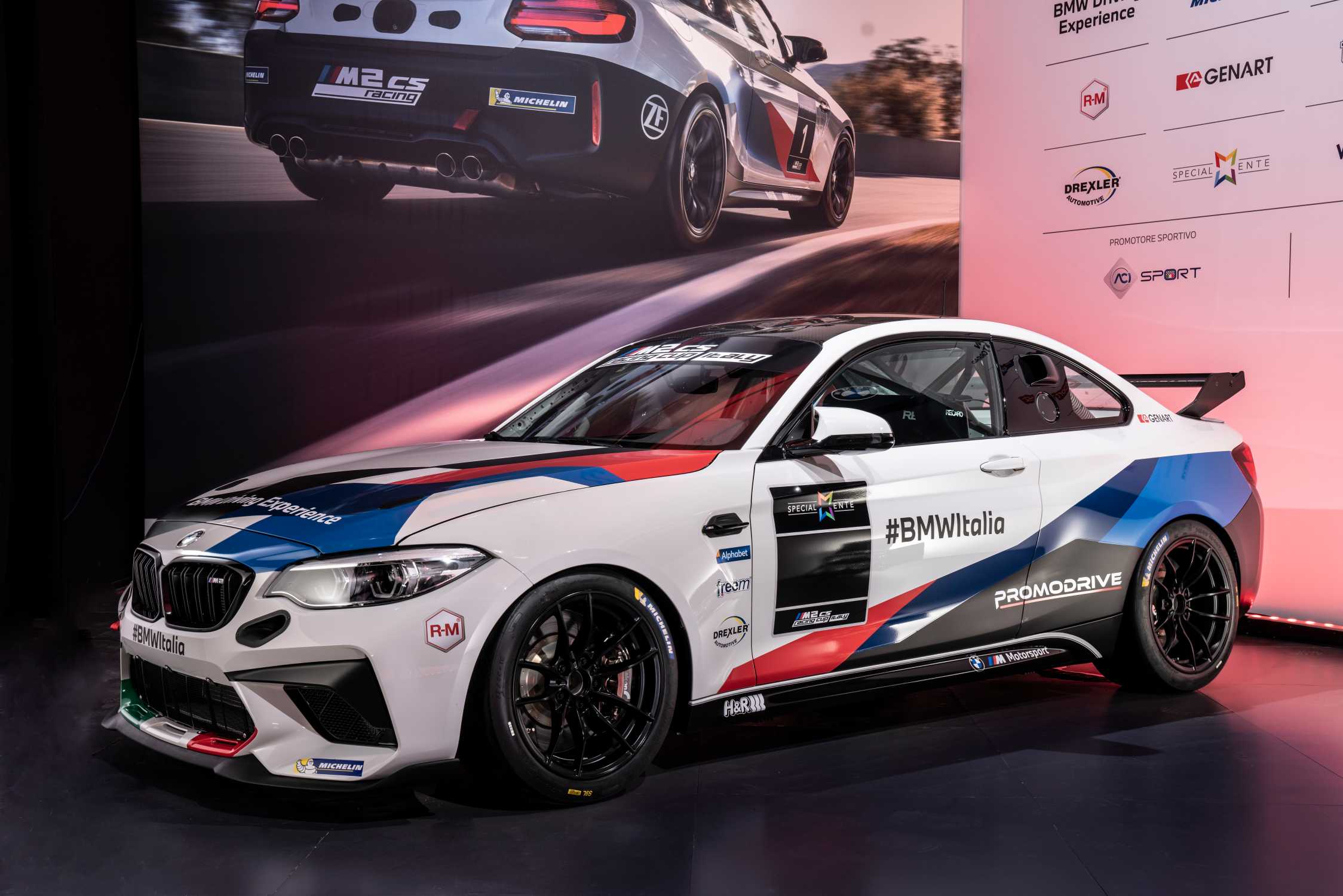
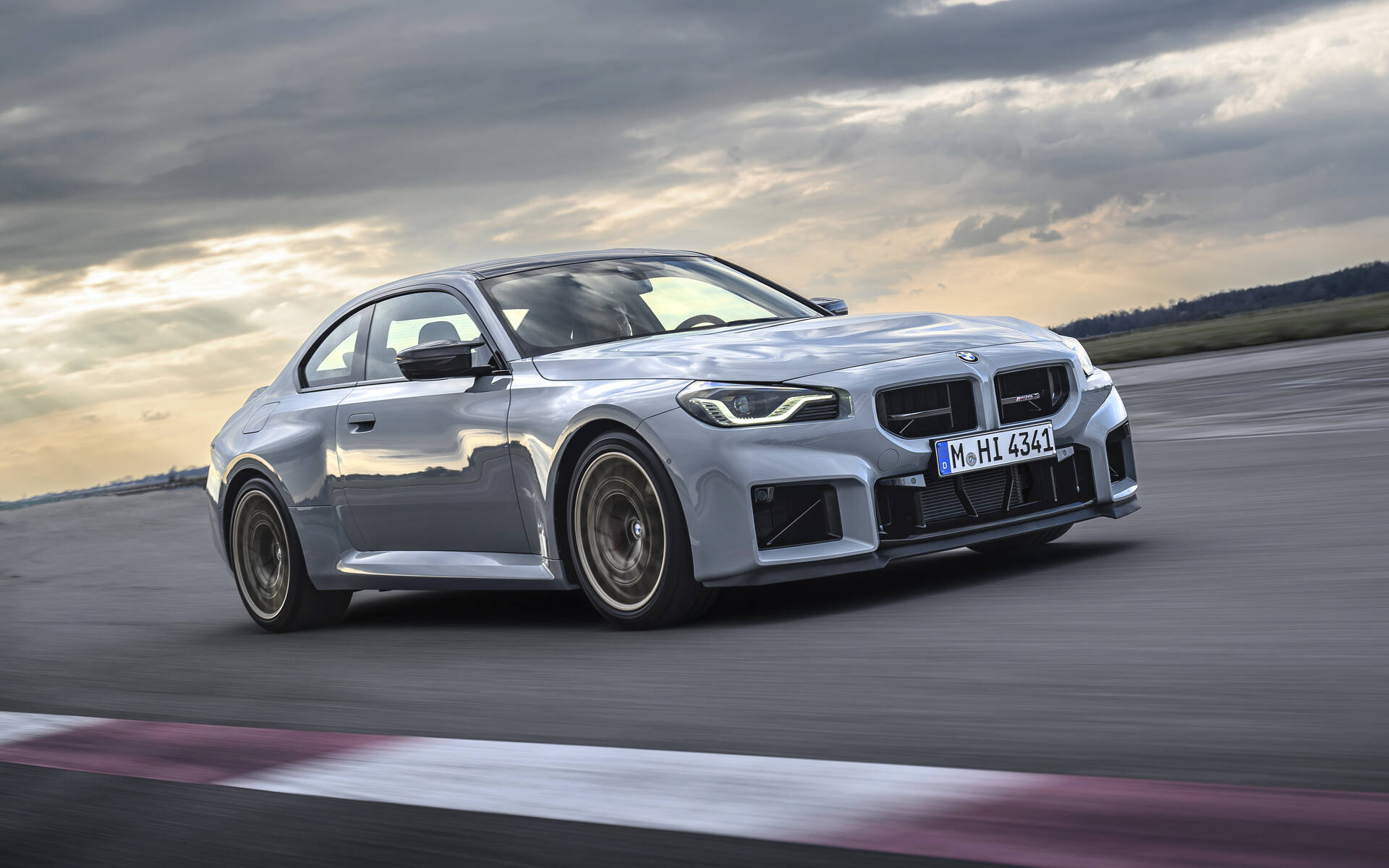
BMW has spent decades negotiating the terms of its own legacy. Nowhere is that negotiation more delicate than with the M2 — the compact coupe that guards the sacred ground of Munich's lineup. It is the spiritual heir to the 2002 Turbo, the last bastion of rear-drive, straight-six purity in a range that has grown ever more digital, ever more electric, ever more polite. So when an Italian coachbuilder announces it will strip the M2 back to its bones and rebuild it as a '70s racing icon, the automotive world sits up.
This is not a tuner's bolt-on fantasy. This is atelier work. And it says something deeper about how BMW's heritage is being reinterpreted by hands outside Bavaria.
Raw Material Worthy of Couture
The project, reported by Car and Driver, treats the M2 as raw material for a retro-futurist exercise — a machine that borrows the visual grammar of BMW's 3.0 CSL and CSL Batmobile era, the wedge-nosed, flared-arch silhouettes that ruled touring-car grids in the early 1970s.
Italy has always understood how to dress German engineering in couture. Across the postwar decades, the great coachbuilding houses turned utilitarian chassis into objets d'art. Applying that same sensibility to a modern M2 is a statement of intent: that the current car's turbocharged S58 inline-six and near-perfect proportions deserve to be recontextualised, not merely modified. The bones are good. The atelier knows it.
A Counterweight to the Electric Offensive
Timing is everything, and this one lands with precision. BMW is in the midst of a profound identity shift. The iX3 has just been crowned Best Interior at the German Car of the Year Awards, and independent highway testing has shown it beating Mercedes and Volvo on efficiency and range. The i3 Sedan reservation date has been pulled forward, signalling that Munich's electric offensive is accelerating faster than planned. Reviews are calling the iX3 the brand's most important vehicle this year.
Against that backdrop, a coachbuilt M2 tribute is not nostalgia for its own sake. It is a counterweight. It reminds the world that BMW's soul was forged in combustion, in homologation specials, in racing liveries that made grown men emotional.
Brand Equity You Can Hear
There is commercial logic here too. BMW's leadership has publicly questioned the pricing strategies of some Chinese EVs entering Europe, arguing that certain figures "make no business sense." Owner-satisfaction surveys continue to place the brand in a fierce three-way scrap with Audi and Mercedes, with one marque leading on both counts.
In that climate, halo projects — even those executed by external coachbuilders — function as brand equity. They generate the kind of cultural heat no specification sheet can manufacture. A reborn M2 racing icon is a conversation starter, a concours lawn magnet, and a tacit reminder that BMW's back catalogue runs deep enough to sustain endless reinterpretation.
Translation, Not Replication
Purists will grumble. They always do. They will argue that a modern M2 carries too much mass, too much assist, too much screen to ever evoke the featherweight aggression of a '70s touring car.
But that critique misses the point. The exercise is not replication; it is translation. The coachbuilder is not pretending the calendar can be rewound. It is asking what the M2 would look like if it had been conceived in an era when aerodynamics were guessed at and bravery was a design brief.
And frankly, BMW needs this. The current news cycle is dominated by electric crossovers, golf tournaments, marathon sponsorships, and pricing debates. All worthy. All strategic. None particularly romantic. An M2 reborn by Italian hands restores a measure of romance. It reminds enthusiasts why they fell for the roundel in the first place — not because of range figures or residual values, but because of the promise that a small, rear-driven coupe with a straight-six could feel like the most important car in the world.
That promise still holds. It just took an Italian atelier to say it out loud.