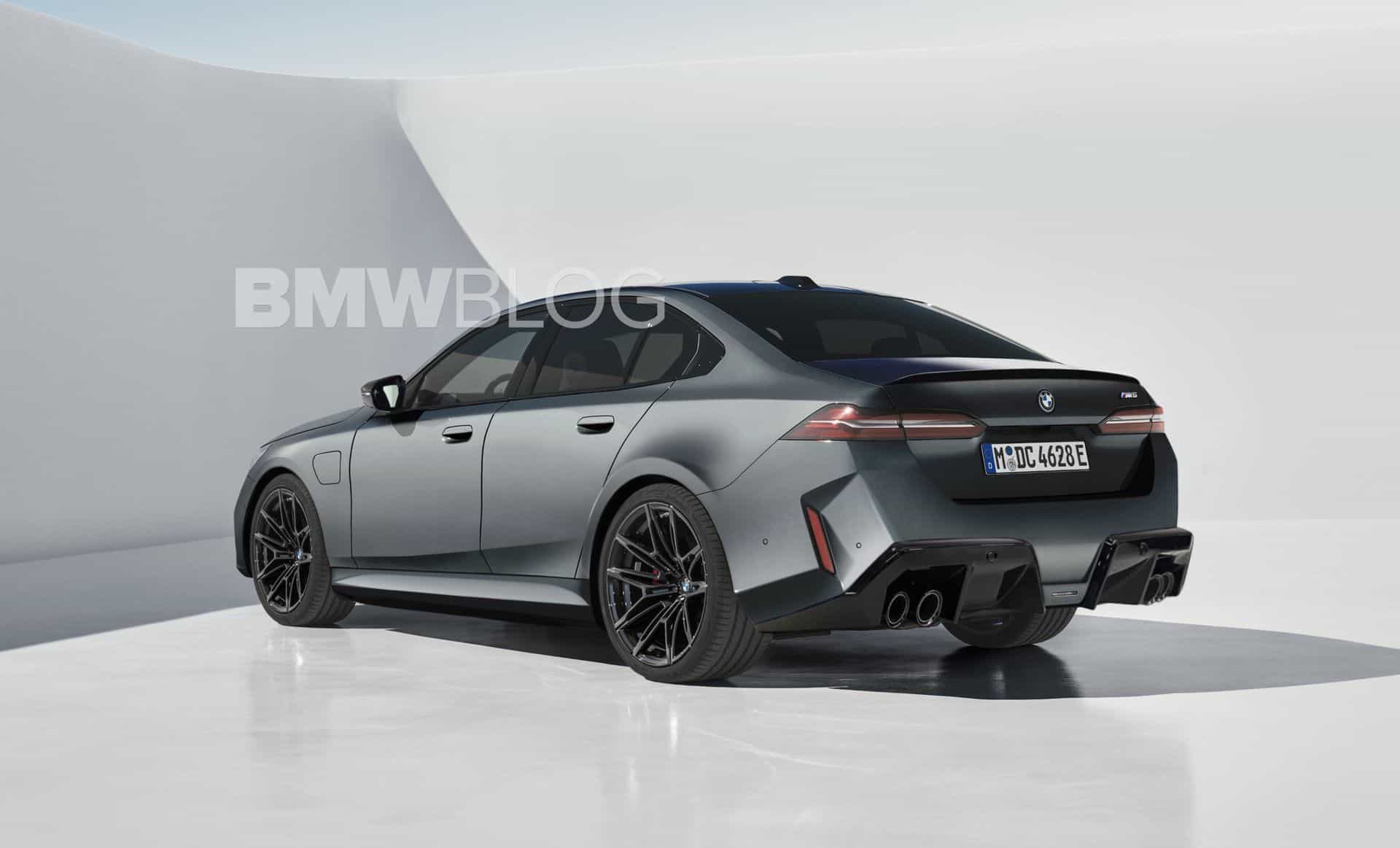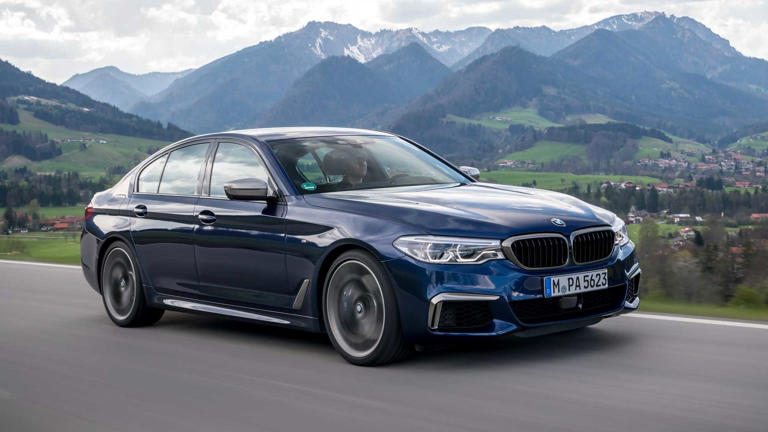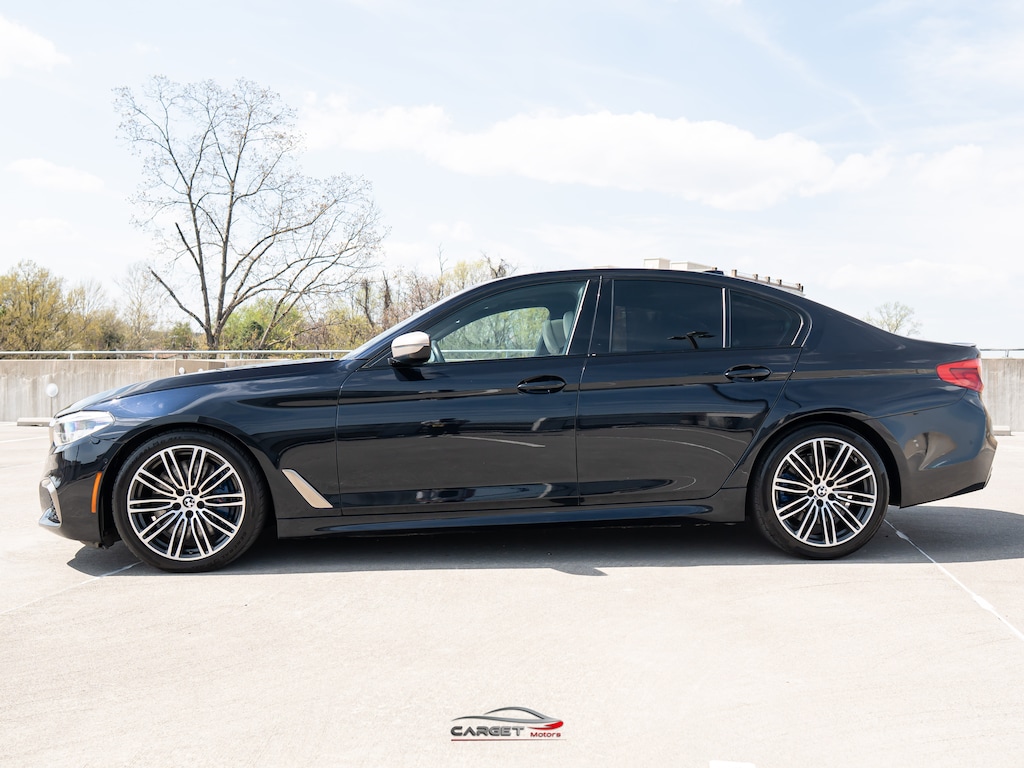
There's a special kind of cognitive dissonance waiting for anyone who idly scrolls the used market and stumbles across a BMW M550i. Here is a four-door that left the factory with a 456-horsepower twin-turbo V8, all-wheel drive, adaptive suspension, and enough leather to reupholster a boutique hotel lobby. It dispatched the zero-to-sixty sprint in under four seconds. It wore a window sticker north of $75,000. And today, a well-kept example changes hands for less than the price of a new Toyota Camry — a car whose most athletic gesture is a confident merge onto the interstate.
The obvious question is why. The answer is less a mystery than a mirror held up to the way the automotive world assigns value. BMW's depreciation curve has long been the stuff of legend, but the modern turbocharged era has sharpened it into something almost violent. The G30-generation 5 Series, and the M550i in particular, sits at the intersection of two forces: the relentless pace of BMW's own model cycles, and the market's quiet terror of out-of-warranty German complexity. A Camry asks nothing of you. An M550i asks for a relationship.
The Car Beneath the Badge
That relationship is not without reward. The N63 engine under the hood — in its later, revised form — delivers a wallop of torque that makes highway passing feel like a formality. The chassis, honed by the same engineers who sculpt the M5, corners with a poise no mainstream sedan can approach. This is not a car that merely transports you; it recalibrates what you expect from the act of driving. And yet the market shrugs. It looks at the badge, mutters something about maintenance, and moves on.
There is a cruel irony in that dismissal. As recent coverage has noted, BMWs routinely prove their mettle over the long haul — one widely circulated comparison of BMW, Mercedes, and Lexus at 250,000 miles found the BMW holding up better than its detractors would ever concede. The narrative of fragility is persistent, but it is not always accurate. What is accurate is the cost of deferred maintenance, and that is precisely where the M550i's bargain status originates. Buyers fear the unknown invoice, so they flee, and the price falls until it meets someone brave enough to look past the reputation.
Depreciation as a Feature
Meanwhile, BMW itself shows no interest in apologizing for its engineering ambition. The company is marking the Nürburgring's 100th birthday with a fleet of special-edition M2s, M3s, M4s, and M5s — a reminder that the marque's identity is still forged at the limit, not in the commuter lane. It is building cars like the Skytop, a coachbuilt roadster limited to fifty units, and it continues to push the boundaries of what a performance sedan can be. The M550i is a direct descendant of that ethos, even if its depreciation curve tells a different story.
So what are you actually buying when you choose a used M550i over a new Camry? You are buying a bargain, yes, but you are also buying a commitment. You are accepting that the oil changes will cost more, that the tires will wear faster, that the occasional warning light will demand attention rather than indifference. In exchange, you get a car that makes every errand feel like an event. You get a V8 rumble no four-cylinder economy sedan can replicate. You get the strange, satisfying knowledge that you are driving something that once cost more than most people's annual salary — and that you paid less for it than the sensible choice parked next to you.
The View From the Driver's Seat
Slide behind the wheel and the arithmetic stops mattering. The M550i's appeal isn't a spreadsheet argument; it's a sensory one. The torque arrives early and stays late, the steering weights up with intent, and the adaptive dampers trade compliance for composure with a flick of the drive-mode selector. It is a sedan that can ferry clients at eight in the morning and hunt apexes by eight at night, and it does both without ever feeling like it's pretending to be something it isn't.
That duality is the whole point. The M550i was never the loudest car in BMW's lineup — that was the M5's job — but it may be the most complete. It carried the V8, the all-wheel drive, and the flagship-adjacent cabin without demanding the flagship price. Time has only sharpened that value proposition, even as it has muddied the car's reputation.
That is the peculiar genius of the modern BMW. It depreciates like a luxury good and drives like a sports car, and for a brief window in its life, those two truths collide into something genuinely irresistible. The Camry will outlast it. The Camry will cost less to run. But the Camry will never, not once, make you glance back as you walk away.