The quarterly headlines out of Beijing have not been kind to BAIC Motor. A net loss across the first nine months of 2026, negative operating cash flow and a shrinking period-end cash position paint the portrait of a state-owned giant caught squarely in the downdraft of a brutal domestic price war. Nikkei Asia hung the setback on the skidding performance of BAIC’s Mercedes-Benz joint venture — the profit engine that has long subsidised the group’s own-brand ambitions. On the face of it, this is another familiar chapter: Chinese legacy automakers struggling to stay relevant in an EV-saturated home market.
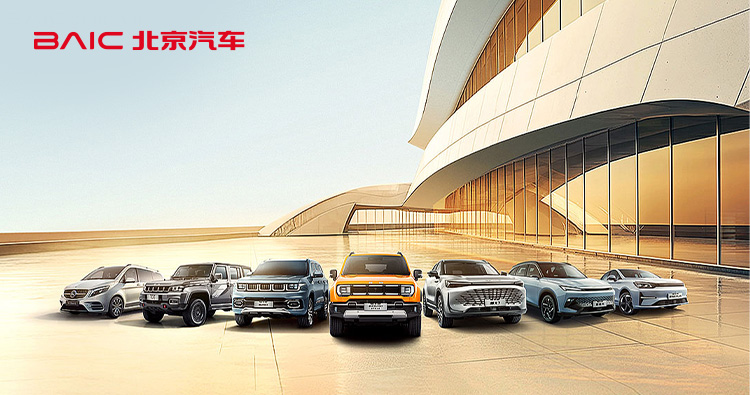
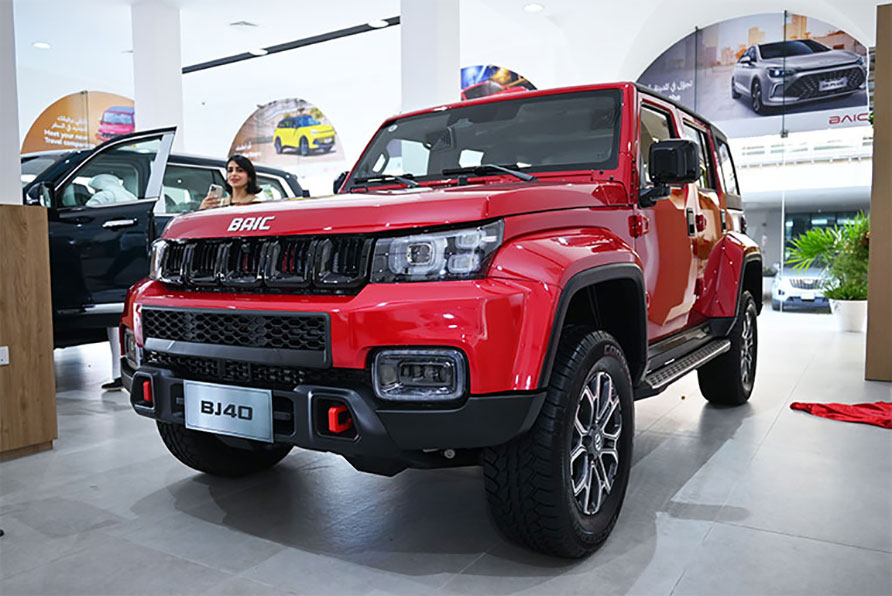
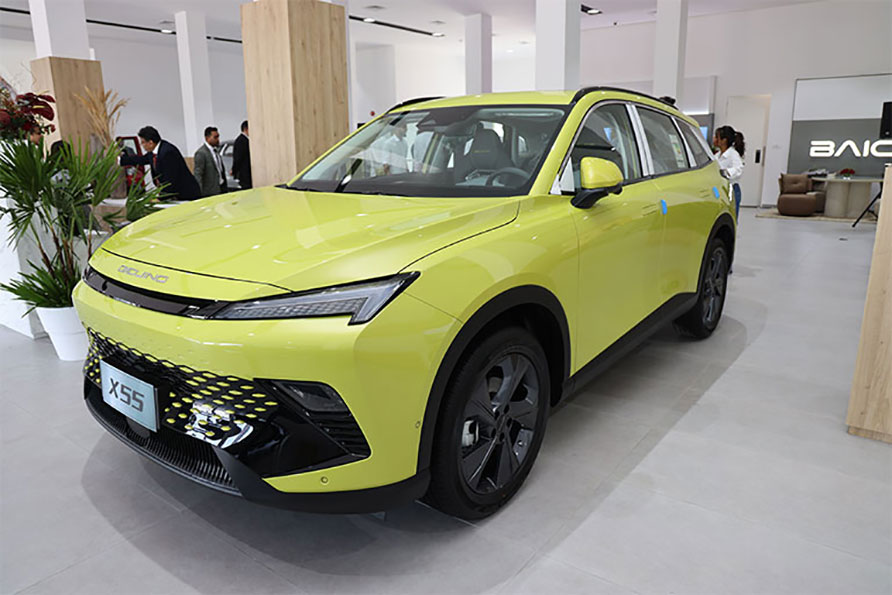
But while the loss column dominates the conversation, a quieter announcement demands our attention. BAIC has launched eight vehicle models in Bahrain. Eight. Not one cautious hatchback shipped to a single dealer, not a tentative toe in the water — a full-line assault on a Gulf market that most European observers would struggle to place on a map. And it may matter far more than the red ink.
The Problem at Home Is Structural, Not Cyclical
Context matters here, because BAIC’s domestic predicament is not a temporary squall. China’s passenger car market has become a theatre of remorseless discounting, with dozens of brands — many bankrolled by deep-pocketed technology firms — fighting over margin that no longer exists. BAIC’s reliance on its Beijing Benz joint venture has become a liability as much as an asset, exposing the group to the fortunes of a premium German marque navigating its own difficult electric transition. When the profit centre sputters, the consolidated numbers bleed.
The capital markets have noticed. BAIC recently scrapped a planned IPO amid tepid investor appetite for car stocks — a telling signal of how sceptical the money men have become about the traditional Chinese OEM model. Even the $1.1 billion commitment from Hyundai and BAIC to their Chinese joint venture reads less as a vote of confidence than a necessary defensive manoeuvre. None of this is the language of momentum.
Bahrain Is Small. That’s Not the Point.
Against that backdrop, the Gulf matters — and Bahrain is a strategically eloquent place to start. In absolute volume it is a small market. In commercial terms it is anything but trivial. It sits within the GCC, a region where purchase power is high, import dependence is near-total and, crucially, Chinese brands have not yet been pigeonholed as budget also-rans.
Launching eight models simultaneously is a statement of intent. It spans the segments that matter and comes backed by the kind of distribution commitment that signals a multi-year strategy rather than an opportunistic shipment. Earlier Chinese export efforts were characterised by hesitant toe-dipping; this is something altogether more deliberate. In a region where buyers assess a car on its merits rather than through the distorting lens of a domestic price war, BAIC gets to compete on value, specification and warranty — and, for a Chinese OEM, on margins that are potentially transformative.
The Huawei Halo Changes the Conversation
The timing carries its own logic. BAIC arrives in the Gulf not with its legacy combustion portfolio alone, but with the halo of its Huawei partnership — the jointly developed electric vehicle that Reuters reported as the first fruit of that collaboration. That alliance hands BAIC something its domestic balance sheet cannot manufacture: a credible technology narrative.
In markets where Chinese EVs are still being assessed on their merits, the Huawei association lends BAIC a premium-adjacent sheen that would be difficult to build from scratch. And the luxury car boom that Barron’s identified as a potential share-price catalyst is, in the Gulf, less a hope than an observable market condition. The region is already buying at the top end. BAIC is arriving with a story that fits.
A Hedge Against the Very Losses Making Headlines
There is a temptation to dismiss the Bahrain launch as a rounding error against a multi-billion-dollar loss. That would be a mistake. Export markets offer what China no longer does: pricing power. In the GCC, BAIC is not scrapping against fifty domestic rivals willing to sell at a loss — it is competing against established Japanese, Korean and European brands on the fundamentals. Every vehicle sold in Manama or Riyadh contributes to a narrative of diversification that Beijing’s policy establishment actively encourages and that investors, once the domestic bloodletting subsides, will eventually reward.
The deeper significance lies in what the move reveals about BAIC’s internal priorities. A company content to manage decline would husband its cash and retreat to the home market. A company with a future builds beachheads abroad while the domestic storm rages. The negative operating cash flow reported for 9M 2026 is a symptom of the war at home; the Gulf expansion is evidence that management understands the war cannot be won on home soil alone. The eight-model launch is, in effect, a hedge against the very losses that dominate the headlines — a first instalment on a strategy judged over years, not quarters.
None of this absolves BAIC of its immediate financial problems. The Mercedes-Benz joint venture will keep weighing on earnings until the premium electric transition finds its footing, and the domestic price war shows no sign of abating. But analysts who fixate on the loss line risk missing the more consequential story. The company that emerges from this period will be judged not by how much cash it conserved during the downturn, but by whether it built the export channels that make it less dependent on China in the first place. On that measure, the launch in Bahrain — unglamorous, distant, easily overlooked — may prove the most important thing BAIC did this year.