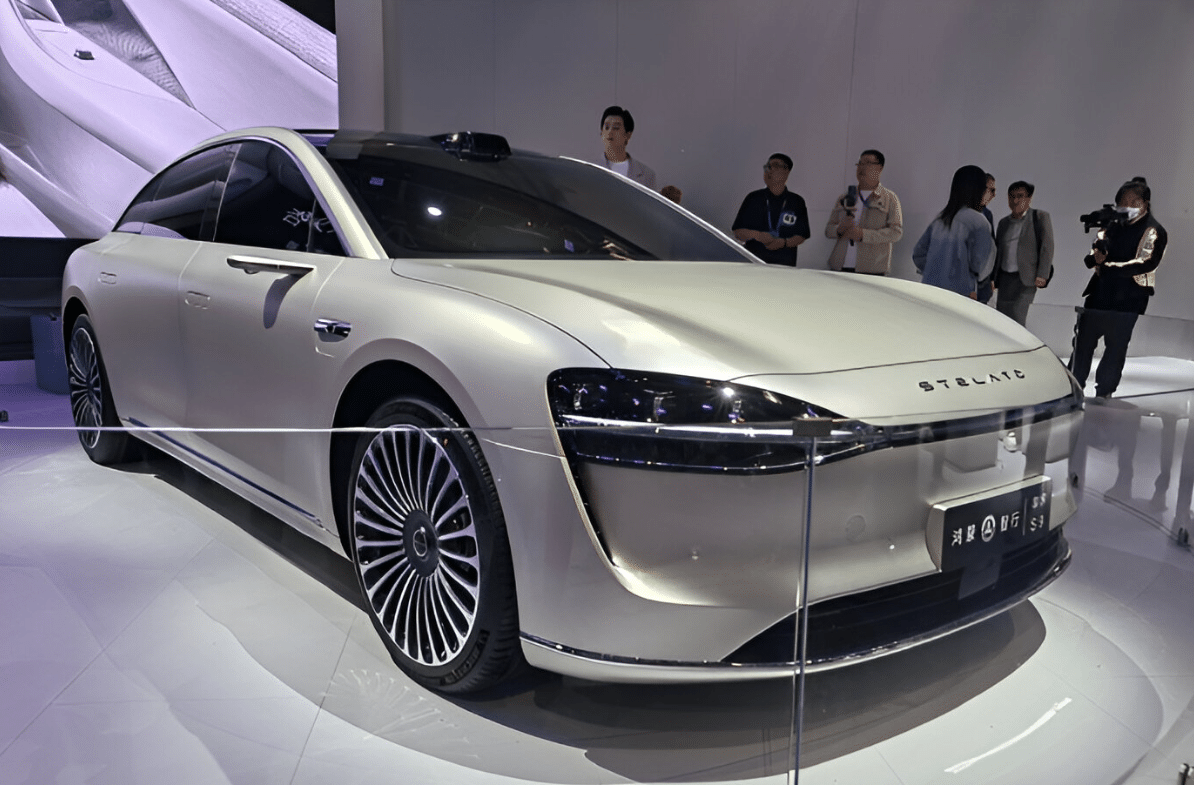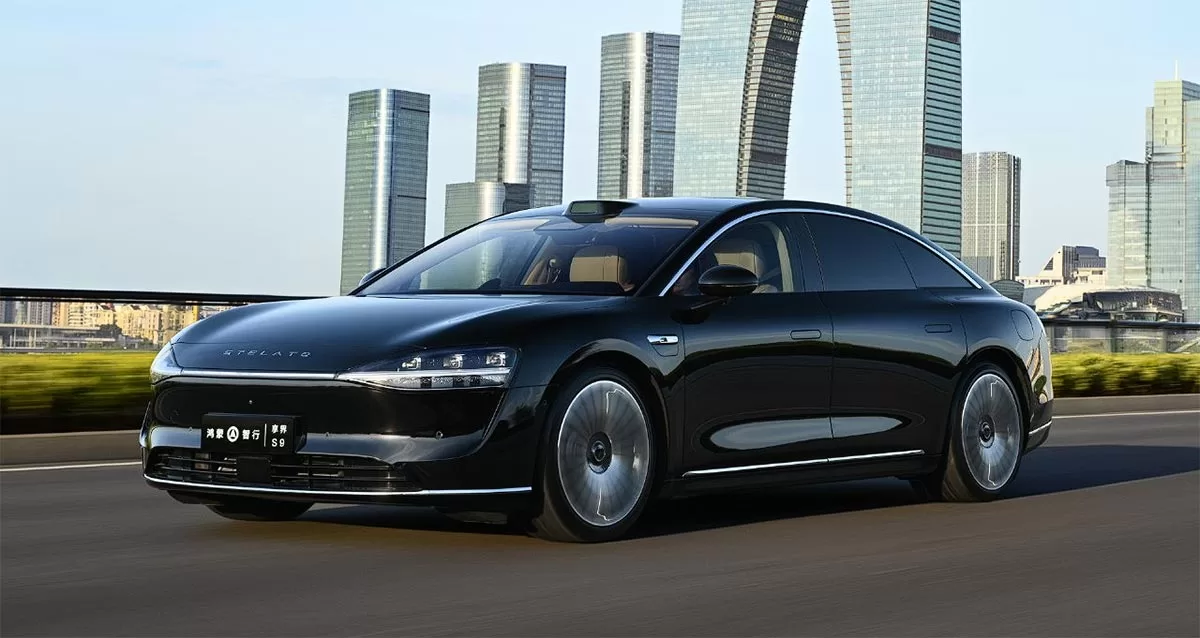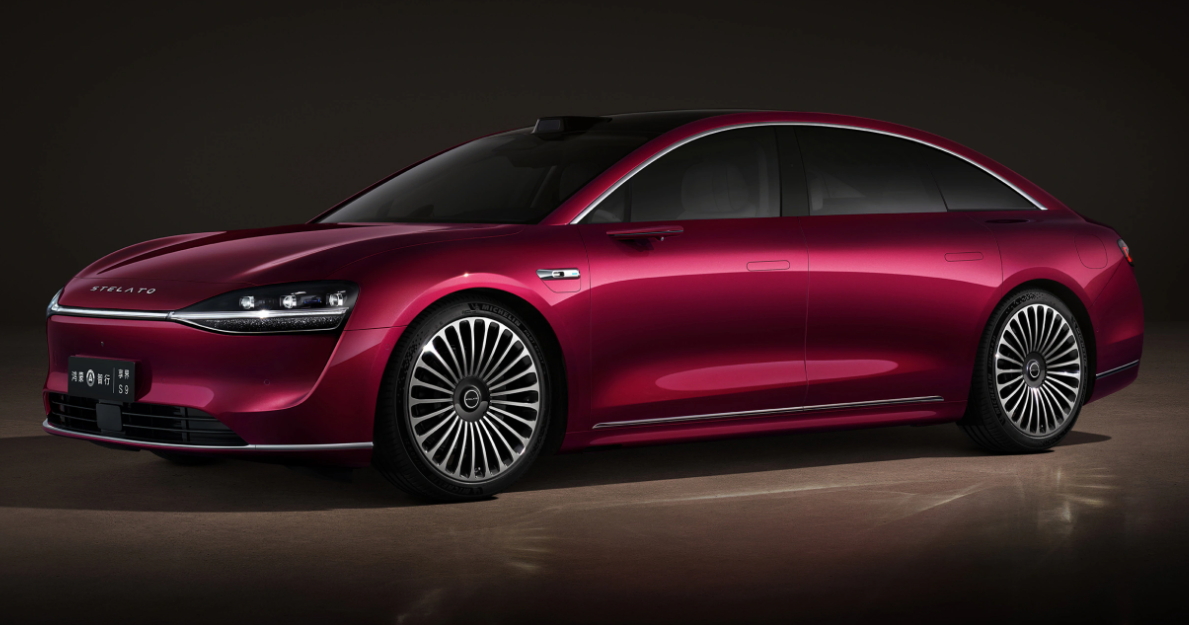
Read the STELATO trademark transfer as routine housekeeping between two of China's most closely entwined industrial partners, and you'll miss the point entirely. The handover of the Xiangjie marque—the name under which Huawei and BAIC BJEV's jointly developed premium sedan is sold—from Huawei to BAIC BJEV is the moment the company stopped being the manufacturing muscle behind someone else's showcase and started consolidating the intellectual property that will define its upmarket ambitions for the next decade. To see why that matters, you have to look past the headline and examine the machinery BAIC BJEV has been assembling in plain sight.
Because premium strategies are funded by scale, and the scale is real. BAIC BJEV's June deliveries of 30,282 units—a jump of 152.54 percent year on year—are not the numbers of a struggling state-owned EV unit trimming its sails. Full-year sales surpassing 200,000 vehicles in 2025 confirm the brand has crossed the threshold where fixed costs begin to behave.
Volume, Then Value
Here's where the story gets interesting. The same corporate parent, BAIC BluePark, has simultaneously been reported as massively reducing capacities at BJEV. The apparent contradiction dissolves on closer inspection: this is not retreat but reallocation, a deliberate swap of low-margin capacity for higher-value output. The planned acquisition of Miyun Plant assets from Foton Motor fits the same logic—consolidating productive assets under BJEV's control rather than renting capability from a sibling.
The capital to execute that pivot has arrived. An 8.15-billion-yuan injection into BAIC BJEV provided the balance-sheet room for both the plant acquisition and the technology bets that follow. Those bets are unusually broad for a company still widely filed under "mass-market EV maker." BAIC BJEV has partnered with CATL to unveil the world's first cell-to-pack battery pack, a structural innovation that trades modularity for energy density and cost. It has integrated humanoid robots into NEV production alongside UBITECH, a move aimed squarely at the labour productivity problem that haunts every high-volume Chinese assembly line. And through its "Full-Domain Fusion" technology programme, it is stitching together chassis, powertrain, and intelligent driving stacks under a single architecture—the unglamorous groundwork on which premium positioning actually rests.
Autonomy as a Valuation Play
Then there is autonomy, where the strategic intent becomes unmistakable. The expanded partnership with Pony.ai, billed as "Cooperation 2.0," will produce an L4 Robotaxi built on the ARCFOX αT5 platform. Note the platform choice. ARCFOX is BAIC BJEV's premium brand, the same marque whose surge drove the group's October sales doubling, and the same marque now being introduced to Japan through an alliance with TURING. Robotaxi development on a premium architecture is not a science project; it is a valuation play, seeding the perception that ARCFOX sits at the technological frontier. Every L4 milestone scored by Pony.ai accrues, in the public mind, to the car wearing the badge.
Owning the Badge
Which brings us back to STELATO. Huawei's decision to place the Chinese trademark in BAIC BJEV's hands clarifies the division of labour in a partnership that has always been more asymmetric than it appeared. Huawei supplies the software soul and the retail halo; BAIC BJEV supplies the platform, the plant, and—now—the brand equity. Owning the trademark means owning the customer relationship, the residual value, and the right to iterate. It is the difference between building someone else's premium car and building your own.
The strategy is not without risk. Capacity reduction, however strategic, invites questions about utilisation. The premium segment in China is brutally crowded, and ARCFOX has yet to prove it can hold price against NIO, Li Auto, and a Huawei-backed AITO that competes for the same showroom traffic. But the pattern across the past eighteen months is coherent to the point of inevitability: raise capital, buy plants, secure battery technology, automate production, partner for autonomy, and take title to the brand. BAIC BJEV is no longer assembling a premium offering on Huawei's behalf. It is assembling one of its own—and the STELATO trademark transfer is the deed of ownership.