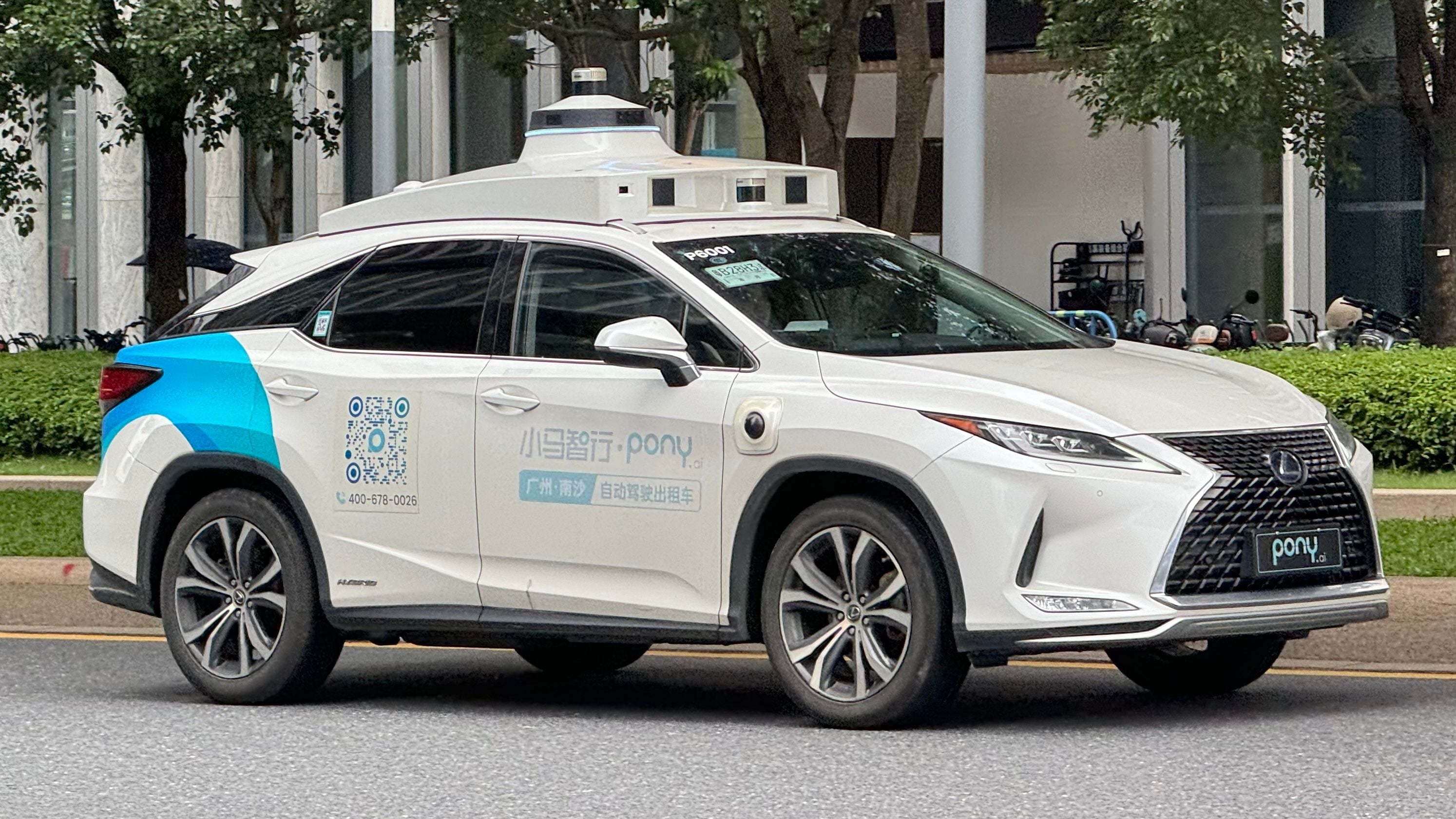
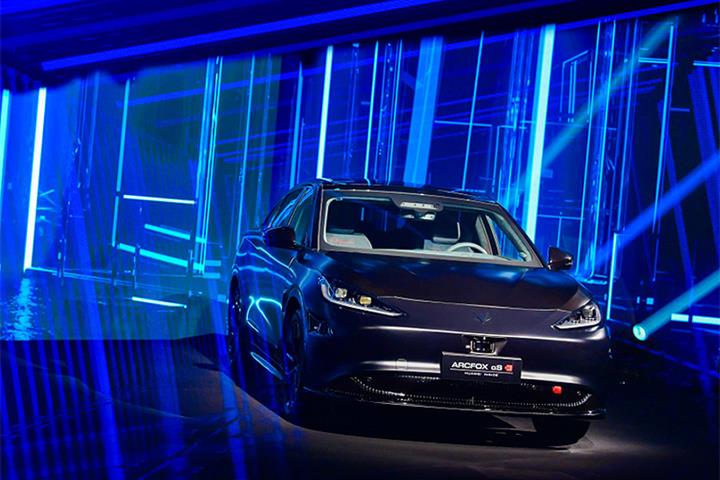
The most telling detail about BAIC BJEV's recent partnership expansion with Pony.ai isn't the technical roadmap—it's the corporate restructuring that preceded it. When the two companies announced their "Cooperation 2.0" to scale L4 robotaxi production, they weren't merely deepening an engineering tie-up. They were placing a monumental bet on a sub-brand that BAIC Group has, over the past two years, systematically hollowed out. The capital injection of 8.15 billion yuan and the headline-making sales surge of over 200,000 vehicles in 2025 obscure a more fragile reality: BJEV is being repositioned from a mass-market EV manufacturer into a high-tech mobility supplier, and its survival now hinges on executing a pivot that has broken far larger automakers.
The numbers tell a story of remarkable, if deceptive, resilience. October sales doubling, with the Arcfox premium line surging, suggests a brand finding its footing. Yet the same period saw BAIC Group "massively reduce capacities" of its EV subsidiary, according to industry reports. This isn't contradictory; it's strategic surgery. BAIC has effectively ceded the entry-level EV battlefield to more agile competitors like BYD and Geely, choosing instead to concentrate on higher-margin, technology-dense vehicles. The problem? BJEV's historical identity was built on affordable, utilitarian electrics—the sort of vehicles that populated China's ride-hailing fleets. That identity is now being dismantled in real time, and the robotaxi partnership is the only coherent narrative left to replace it.
The Conditional Vote of Confidence
Pony.ai's decision to expand with BJEV is a vote of confidence, but it's a conditional one. The partnership's scale—moving from prototypes to "mass production" of L4 vehicles—requires a manufacturing partner capable of adapting to the brutal demands of autonomous fleet operations. BJEV's new facilities, equipped with ABB's cutting-edge automation, are designed for that future. Yet there's an uncomfortable parallel here: BJEV is essentially becoming a contract manufacturer for a robotaxi operator, a role that historically offers thin margins and little brand equity.
The sub-brand is betting that by mastering the production complexities of L4 vehicles—redundant steering, sensor fusion, fail-operational thermal management—it will emerge as the indispensable partner, not just for Pony.ai, but for the entire autonomous mobility ecosystem. That's a bold wager, because these aren't just engineering challenges. They're manufacturing challenges that demand a level of precision and systems integration that separates true players from poseurs. The fact that BJEV is investing in this capability suggests it understands the stakes.
The Survival Calculus
This is where the survival calculus becomes stark. A sub-brand that loses its consumer identity while failing to secure a dominant position in autonomous vehicle production faces a slow, bureaucratic death. The 8.15-billion-yuan injection is not a gift; it's a lifeline with strings attached. BAIC Group is effectively funding a transformation that must prove its worth within a narrow window. The integration of humanoid robots from UBITECH into BJEV's production lines is another signal of this strategy—an automaker betting that its future value lies in advanced manufacturing integration, not in the emotional appeal of its badge.
The deeper risk, however, is that BJEV is caught between two worlds. Its Arcfox brand shows genuine consumer traction, suggesting there's still a viable retail business. But the corporate focus is clearly shifting toward the robotaxi play, where Pony.ai holds the technological high ground. In such partnerships, the automaker often becomes the junior partner, providing the chassis and the factory floor while the AI company captures the data and the service revenue. BJEV's "full-domain fusion" of smart tech, as touted in its recent press materials, is an attempt to claim more of that intellectual territory. But without a proprietary autonomous driving stack, it risks being relegated to a component supplier with a fancy paint job.
The High-Wire Act
Survival, then, is not about sales volume. It's about becoming too strategically important to be absorbed or disbanded. BJEV's path to that status runs directly through the Pony.ai partnership. If the L4 production line scales successfully, if the vehicles achieve commercial viability in Chinese cities, then BJEV secures a role that BAIC Group cannot easily dismantle. If it fails—if the technology stalls, if the economics of robotaxis remain elusive—then the sub-brand will have spent its capital and its credibility on a future that never arrived.
The October sales surge will be remembered as a fleeting anomaly, not a turning point. For now, BJEV is running a high-wire act, balancing a fragile retail business against a transformational bet. The only certainty is that the fall, if it comes, will be spectacular.
But here's the thing about high-wire acts: they're only worth attempting when the alternative is certain failure. BAIC Group has clearly decided that incremental evolution won't cut it in China's hyper-competitive EV landscape. By pushing BJEV toward the autonomous frontier, they're making a philosophical statement about what an automaker can become. Whether that vision holds depends on execution, timing, and a bit of luck. For a brand that once defined itself by moving people cheaply and efficiently, the new mission is far more ambitious: to move them without a driver at all. That's a gamble worth watching—and one that will define BJEV's legacy, whatever the outcome.