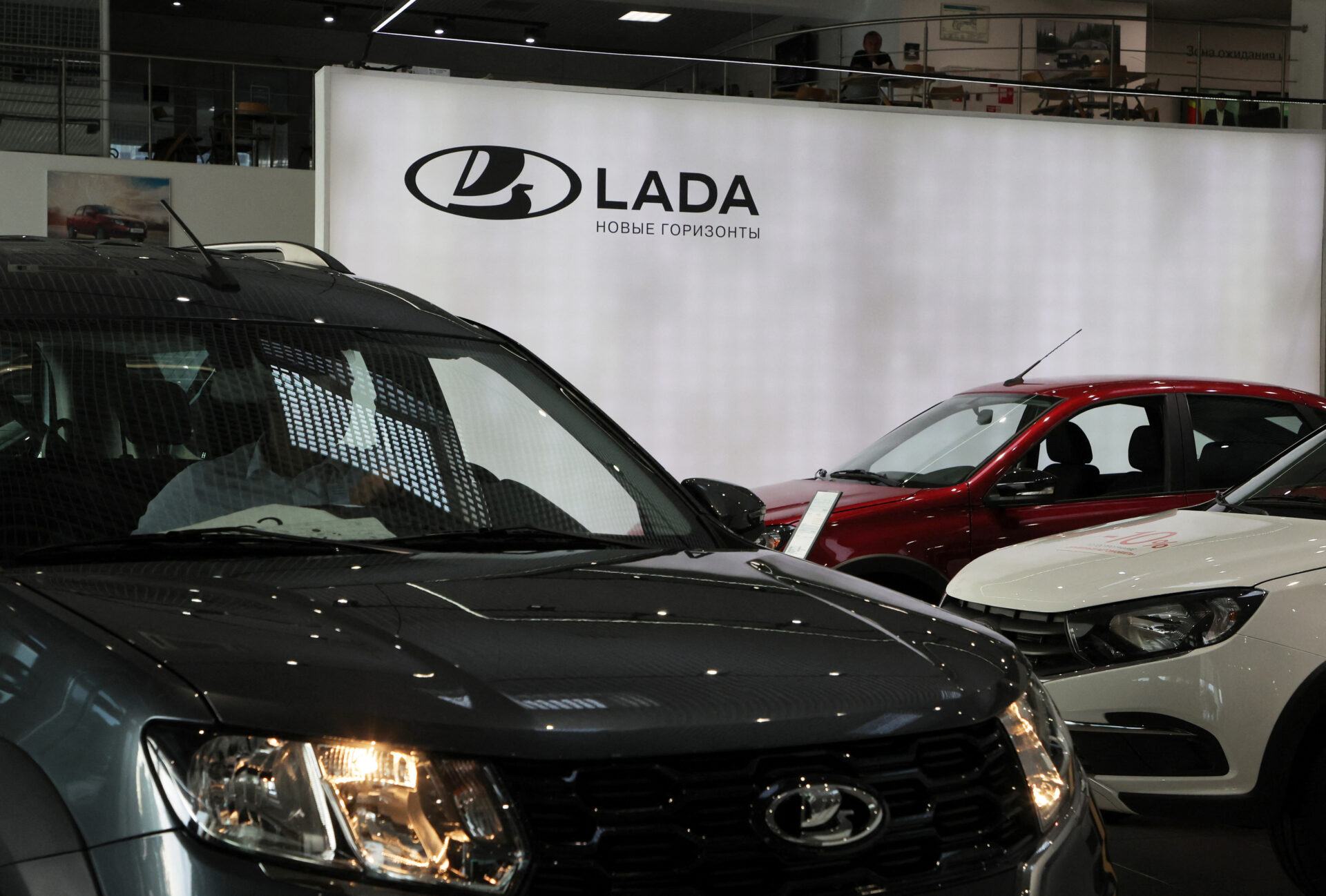
For decades, the Lada sedan has been the attainable family car of the Russian automotive imagination—bought new from a dealer down the road, serviced at the same address, traded in a few years later for the next generation. That ownership ritual is now under visible strain. When AvtoVAZ begins shuttering dealerships in Moscow, as recent reporting indicates, it is not merely trimming retail overhead. It is signalling that the traditional private-sale model for its sedan line is becoming economically unworkable, and that the future of the Lada four-door lies increasingly with institutional buyers rather than individual ones.
The forces behind this retreat are cumulative and well documented. AvtoVAZ has cycled through production halts tied to falling Lada sales, shortened and then restored workweeks at its Tolyatti plant, and warnings that output and sales could contract by as much as 25 percent as state subsidies expire. The Russian car market has posted its worst start to a year in two decades, according to the company's own executives. Against that backdrop, every showroom carries a fixed cost that a shrinking private customer base can no longer justify. Closing dealerships is the logical response of a manufacturer converting from a retail-led distribution model to something narrower and more controlled.
The Arithmetic of Retreat
That narrower model is already taking shape. AvtoVAZ has launched a Lada subscription service—a clear admission that a growing share of Russian motorists want mobility without the burden of ownership, and a hedge against the very retail collapse it is managing. Subscription and corporate channels share a crucial advantage: they aggregate demand. A single fleet contract for fifty sedans replaces fifty individual showroom visits, fifty financing negotiations, and fifty relationships with private buyers whose disposable income is increasingly uncertain. For a company whose finances have drawn scrutiny amid market decline, the appeal of predictable, bulk-volume sales to taxi operators, municipal fleets, and corporate pools is difficult to overstate.
From Showroom to Procurement
The dealership retreat thus reads less as a crisis than as a strategic narrowing. The Lada sedan is being repositioned—not by marketing decree but by the quiet arithmetic of closures—as a fleet-first product. This has consequences beyond distribution. Fleet buyers prioritise durability, serviceability, and total cost of ownership over trim variety and showroom experience. A manufacturer oriented toward such customers can simplify its offering, concentrate parts and service infrastructure, and insulate itself from the swings of consumer confidence. It is, in effect, a partial withdrawal from the passenger-car market as conventionally understood, and a re-entry into the commercial-adjacent segment where the Lada name still carries weight.
The Cost of Invisibility
There are risks in this contraction. A brand absent from the high street loses the everyday visibility that sustains residual values and cultural relevance; the sedan that once sold on presence now sells on procurement contracts. The company's ambitions—talk of a rival to the BMW X5, plans once floated for half a million units a year—sit awkwardly beside a retail network in retreat and export demand that is weakening. Restoring a full working week in January 2026, as Reuters reports, suggests confidence in stabilised volumes, but those volumes will look different in composition: fewer private buyers, more institutional ones, and a subscription funnel absorbing those who still want a Lada without owning one.
For anyone who has tracked AvtoVAZ through decades of reinvention, the dealership closures are the most telling development yet. They mark the moment the company stopped pretending that its sedan could compete for the private buyer's showroom visit on equal terms, and began building a business around the customers who never visit a showroom at all. Whether that is pragmatism or retreat depends on the next subsidy cycle—but the direction of travel is no longer in doubt. The Lada sedan is becoming a car you are issued, subscribed to, or procured, rather than one you simply buy.