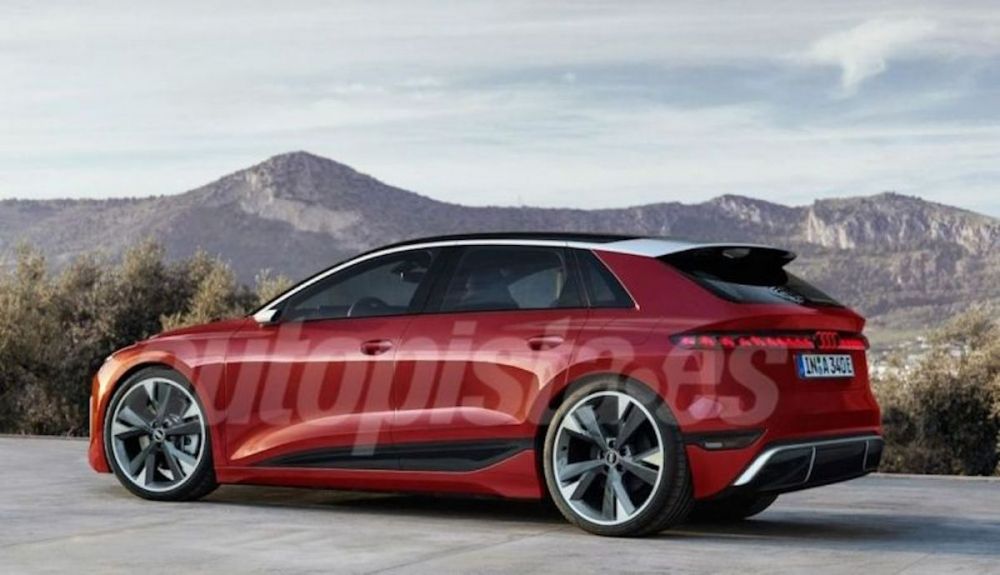
Twenty-one months. In an industry where a single model cycle can swallow five to seven years, that number lands like a downshift you didn’t see coming. It is the gap between Audi’s established development cadence and the pace at which it brought the A2 E-Tron from drawing board to production readiness — a compression of time that borders on the implausible.
The obvious assumption is brute force: more engineers, more budget, more hours. According to those close to the program, the reality is almost the opposite. Audi did not throw bodies at the problem. It threw away the processes that made bodies necessary.
The End of the Relay Race
The traditional automotive development pipeline is a monument to sequential caution. Design freezes, engineering sign-offs, supplier rounds, physical prototyping and validation phases follow one another in a rigid relay race, each stage waiting politely for the last to finish. The A2 E-Tron program collapsed that relay into something closer to a rugby scrum. Engineering, design and software teams worked simultaneously on a shared digital twin rather than handing off static files across departmental walls. Decisions that once took weeks of committee review were made in days by small, empowered teams with direct authority — and, crucially, direct accountability.
Speed Without Extra Hands
What makes this genuinely significant is not the speed itself but where the speed came from. Audi has been candid that the secret was not additional headcount. It was the elimination of what insiders bluntly call “organisational drag” — the endless alignment meetings, the layered approvals, the tendency of large manufacturers to treat every decision as precedent-setting. By giving the A2 E-Tron team a defined mandate and a protected perimeter, Audi allowed engineers to fail fast in simulation rather than fail expensively in metal. Virtual validation replaced a substantial portion of physical crash and durability testing, and suppliers were brought in as co-developers from day one rather than as vendors responding to finished specifications.
A Brand Recalibrating in Real Time
There is a deeper strategic logic here that extends well beyond one compact electric model. Audi’s broader narrative in 2026 is one of recalibration — the RSQ3 has been retired, the new RS 5 Sedan is generating genuine cross-shopping debate against the BMW M3, and the brand is simultaneously managing an ambitious Formula 1 entry while fielding investor interest in that program without ceding control. In China, the Audi-SAIC cooperation is explicitly pursuing what executives call “China speed” — a recognition that the old Wolfsburg tempo no longer sets the global benchmark. The A2 E-Tron is, in effect, Audi proving to itself that it can move at the pace its competitors now demand.
The Template, Not the Stunt
This matters because legacy manufacturers have spent the past decade insisting that heritage, safety standards and regulatory complexity make them structurally incapable of matching the development velocity of newer entrants. The A2 E-Tron timeline quietly demolishes that argument. Audi did not lower its standards; it rebuilt the scaffolding around them. The 21-month figure is not a stunt. It is a template — one that likely previews how the next generation of Audi EVs, from the forthcoming speedy Q3 variant to whatever replaces the current lineup, will be conceived and delivered.
For enthusiasts, the implication is subtle but real. Faster development cycles mean Audi can respond to market shifts while they are still happening rather than three years after they have passed. It means the brand’s design language — the same language recently licensed for something as unexpected as a dual-boiler espresso machine — can evolve at the speed of culture rather than the speed of committee. And it means that when Audi commits to a segment, it can arrive with conviction instead of arriving late with an apology.
The A2 E-Tron may never be the most celebrated car in Audi’s history. But it might be the most instructive. Twenty-one months faster, with no extra engineers, is not a story about resources. It is a story about what happens when a hundred-year-old company finally decides that its own bureaucracy is the only competitor worth beating.