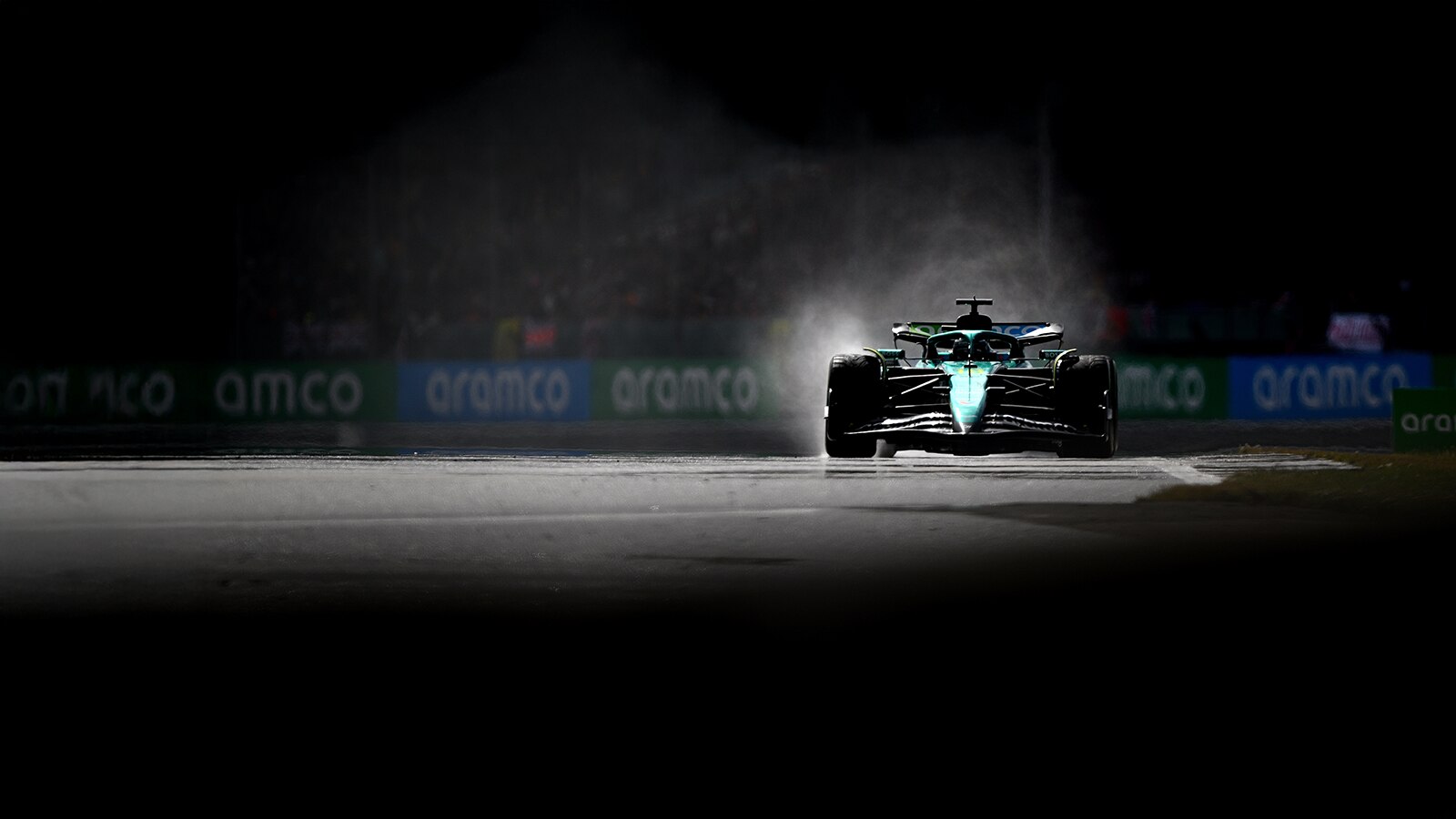
Every Formula 1 team talks about the wind tunnel the way novelists talk about their desks—as the place where the real work happens, away from the cameras. At Aston Martin, that work has taken on an unusual significance. The Silverstone-based squad's aerodynamic gains have become one of the paddock's more closely watched storylines, and the extraordinary figures now hinting at genuine pole potential are not merely a racing matter. They are a preview, written in carbon fibre and computational fluid dynamics, of what the marque's next road-going supercar will look like when it cuts through the air.
The connective tissue here is not marketing puffery. Aston Martin has been unusually explicit that its Formula 1 programme is a technical engine for the road car division, and the arrival of Adrian Newey as managing technical partner has sharpened that relationship into something closer to a shared nervous system. Newey's assessment of Honda's progress amid the growing buzz at Aston Martin has dominated headlines, but the more consequential story is the methodology he brings: an obsession with how air behaves at the margins, where tenths of a second and fractions of a drag coefficient live. That same discipline is being fed into the road car wind tunnel programme, and the results are beginning to surface in prototypes spotted testing with aggressive, F1-derived aero surfaces.
Downforce Without the Drag Tax
Consider what the racing side has actually demonstrated. The extraordinary figures hinting at pole potential reflect a car that has found downforce without paying the traditional drag penalty—an efficiency problem that matters far more to a road car than to a grand prix machine. A race car can afford a thirsty, drag-heavy setup if the regulations reward cornering speed. A supercar cannot. It must be stable at 200 mph, docile in a car park, and capable of surviving a customer who treats the throttle as a binary input. The aero philosophy being validated in the tunnel at Silverstone—ground-effect management, vortex control, carefully managed airflow around the wheel arches—translates directly into a road car that generates serious downforce without the grotesque wings that once defined the genre.
The Newey Signature, With a Number Plate
The timing is not coincidental. Aston Martin's F1-inspired monster has been spotted testing with record-breaking claims attached, and the language emerging from the development team echoes the racing operation's vocabulary: efficiency, balance, predictability at the limit. That is the Newey signature, refined over decades at Williams, McLaren, and Red Bull, now being applied to a machine that will carry a number plate. The racing team's aerodynamicists and the road car engineers are, for the first time in the company's history, working from a genuinely shared data set rather than exchanging polite presentations at Christmas.
Momentum, and What Actually Justifies the Price Tag
There is a commercial logic beneath the technical one. Aston Martin has spent years rebuilding a brand that once traded on beauty alone, and the F1 project has given it something rarer than heritage: contemporary proof of engineering seriousness. The re-signing of Fernando Alonso through 2027, the steady stream of young drivers like Crawford getting FP1 outings, the fan forums and the Hot Wheels Super Treasure Hunt—all of it feeds a perception of momentum. But momentum is cheap. What justifies the next supercar's price tag is the claim that its aerodynamics were born in the same tunnel, tuned by the same minds, that are chasing poles on Sunday.
The Invisible Argument
The quiet part, of course, is that wind tunnel gains are invisible. Nobody buys a car because of a drag coefficient. But they buy the story of one—the sense that the machine in their garage shares DNA with the one on the grid. Aston Martin's F1 aero work is not merely previewing its next supercar. It is rehearsing the argument for it, one airflow vector at a time, in a tunnel where the cameras never go.