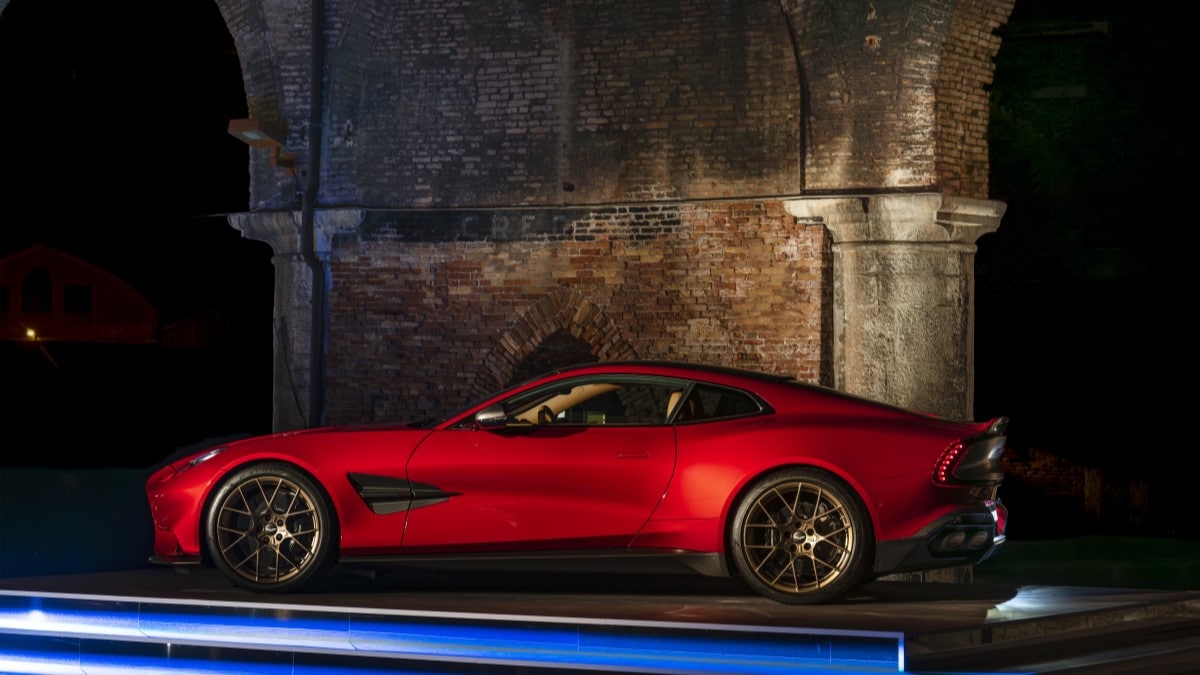
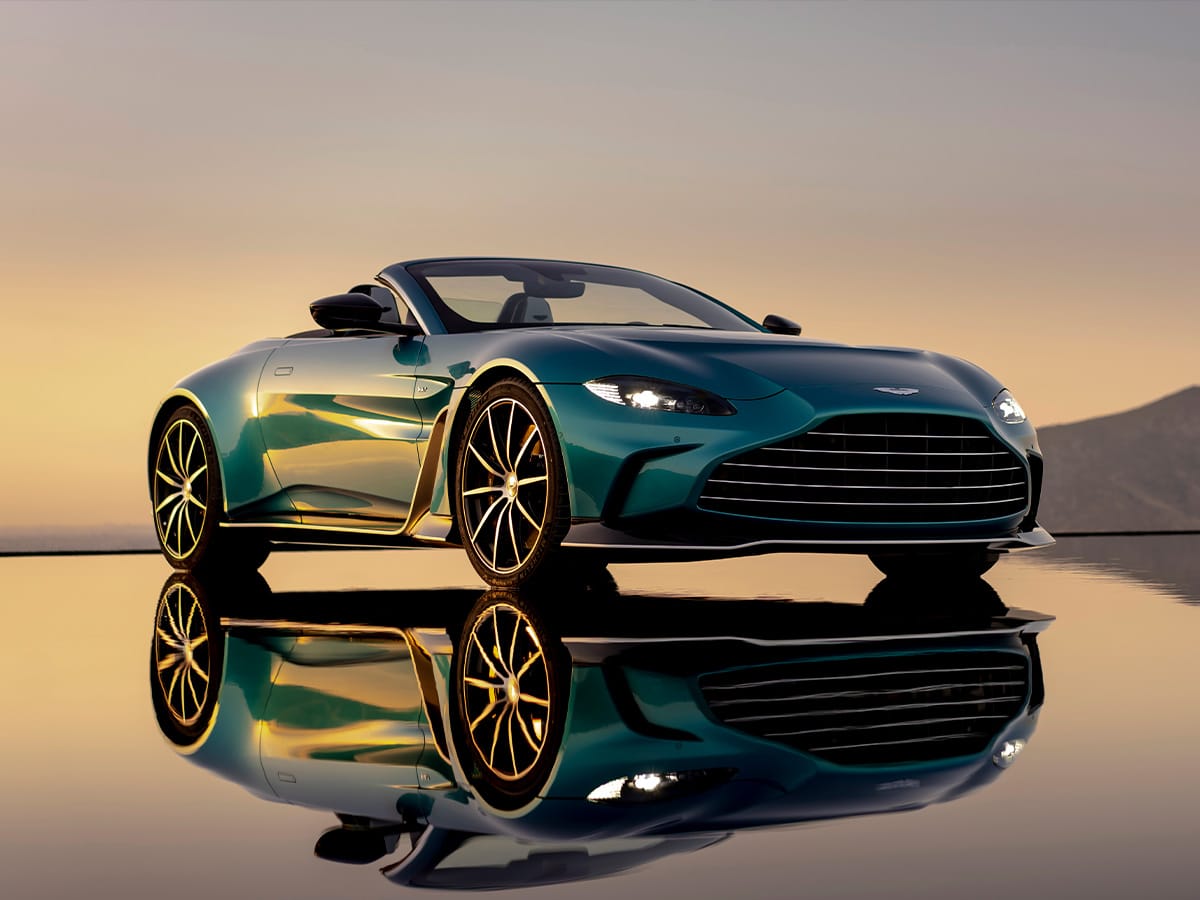
In an industry that treats electrification as an inevitability to be met head-on, Aston Martin has done something quietly subversive: it has admitted it is in no hurry. The Gaydon marque confirmed this week that it will lean on its V8 and V12 powertrains well into the next decade, pushing back its all-electric ambitions while rivals pour billions into battery plants and silent saloons. Read cynically, this is a company buying time. Read correctly, it is a company cashing in on the last great era of the combustion engine — and doing so with the confidence of a brand that knows exactly what its customers want.
Because here is the thing about a twelve-cylinder Aston: nobody buys one because they have to. They buy it because they cannot resist.
The Vanquish Makes the Case for Itself
The evidence is everywhere you look. The Vanquish, revived with a twin-turbocharged V12, has been greeted not as a relic but as a revelation — reviewers calling it everything a twelve-cylinder car should be, a front-engined flagship with the muscle and menace that define the breed. That is the sound of a thesis being validated in real time.
Then there is the collector market, which has a way of cutting through corporate spin. A 2023 V12 Vantage, number 227 of just 333 built and finished in Lime Essence, heads to Barrett-Jackson's Scottsdale auction with no reserve. That a limited-run V12 Aston can cross a block without a safety net tells you something the spreadsheets cannot: demand for these cars is not nostalgia. It is appetite.
Why the Delay Makes More Sense Than the Headlines Suggest
This is the strategic logic behind the delay, and it is sounder than the coverage implies. Aston Martin is not a mass manufacturer that can amortise an EV platform across a million hatchbacks. It builds perhaps a few thousand cars a year, each one sold on emotion, sound, and scarcity.
The customer walking into a showroom for a Vanquish or a Vantage is not cross-shopping a Tesla. They are buying the thrum of a V12 at full throttle, the crackle on the overrun, the knowledge that this configuration is living on borrowed time. Electrification, for a brand like this, is not an engineering problem — it is a branding problem. Silence is the one thing a supercar cannot sell.
Racing, Dakar, and the Stories an EV Startup Cannot Tell
There is a motorsport dimension here too, and it is no coincidence that the road-car and racing narratives are converging. Fernando Alonso and Lance Stroll have both committed to Aston Martin Aramco through 2027, and the team arrives in Singapore talking up its prospects while quietly spying on rivals through AI-assisted radio monitoring.
Alonso, not content with Formula 1, is set for a Dakar Rally comeback in an Aston Martin — reportedly in a machine descended from the wild Dreadnought concept built for a Call of Duty game. It is an absurd, glorious, deeply on-brand piece of theatre: a two-time world champion racing a video-game car across the dunes. No EV startup has that story. Aston Martin has nothing but stories.
An Encore, Not a Retreat
None of this means the electric future has been cancelled. It has been rescheduled, and rescheduling is a luxury that only brands with something worth waiting for can afford. Aston Martin is gambling that the regulatory timeline will bend, that hybrids will bridge the gap, and that the final act of the internal combustion supercar will be its most profitable. Given the reception of the Vanquish and the frenzy around limited V12 specials, it is a gamble with favourable odds.
The critics will call it a delay. Aston Martin would prefer you call it an encore. Either way, the V12 is not going quietly — and for once, that is precisely the point.