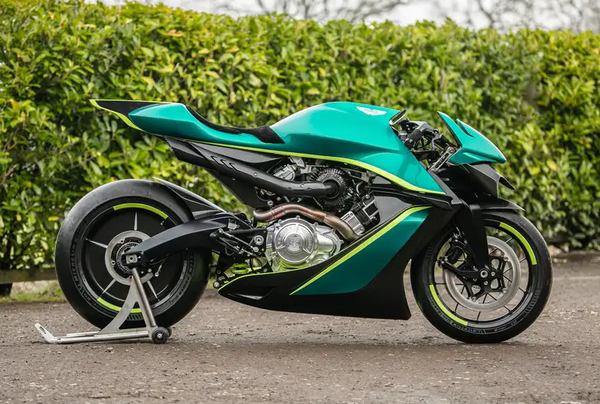
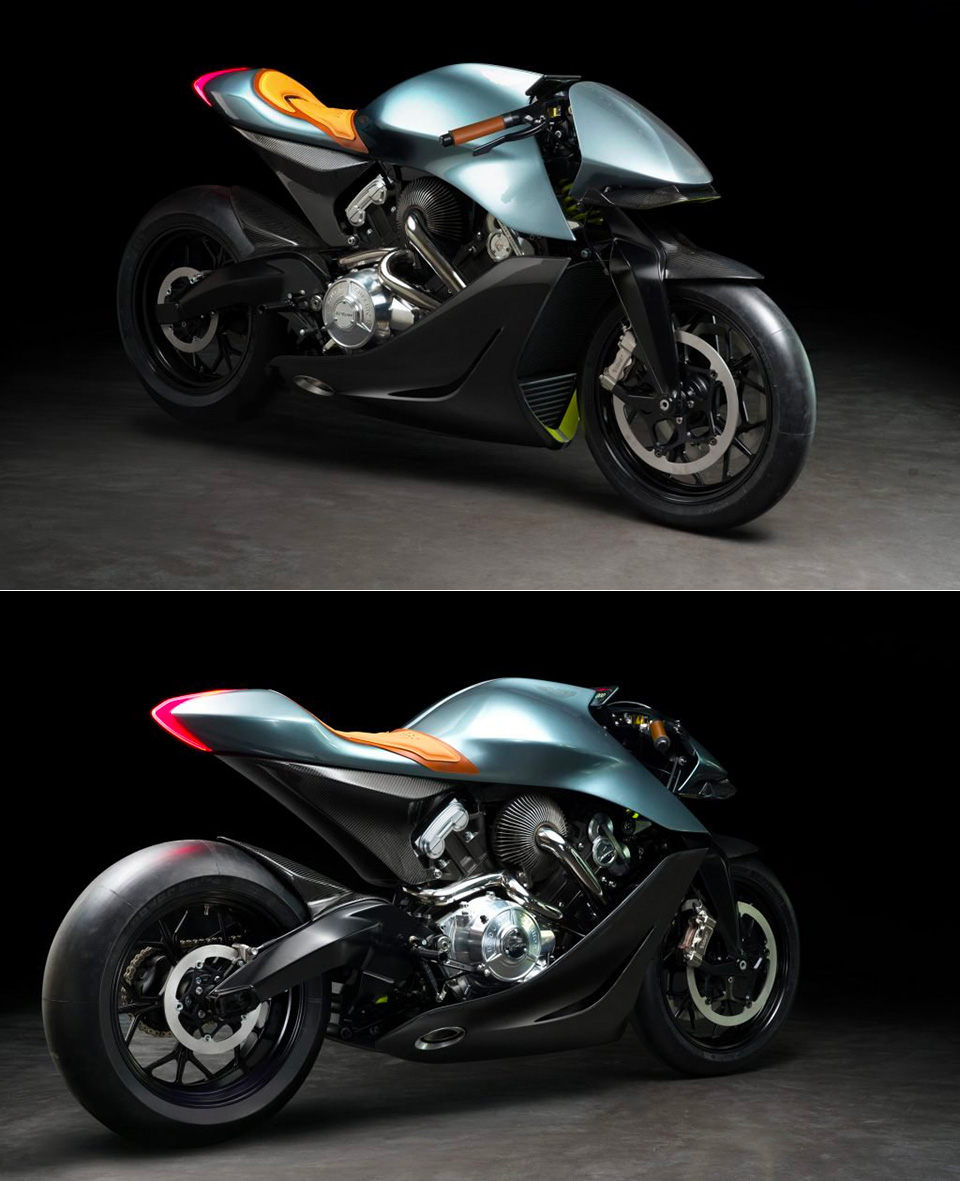
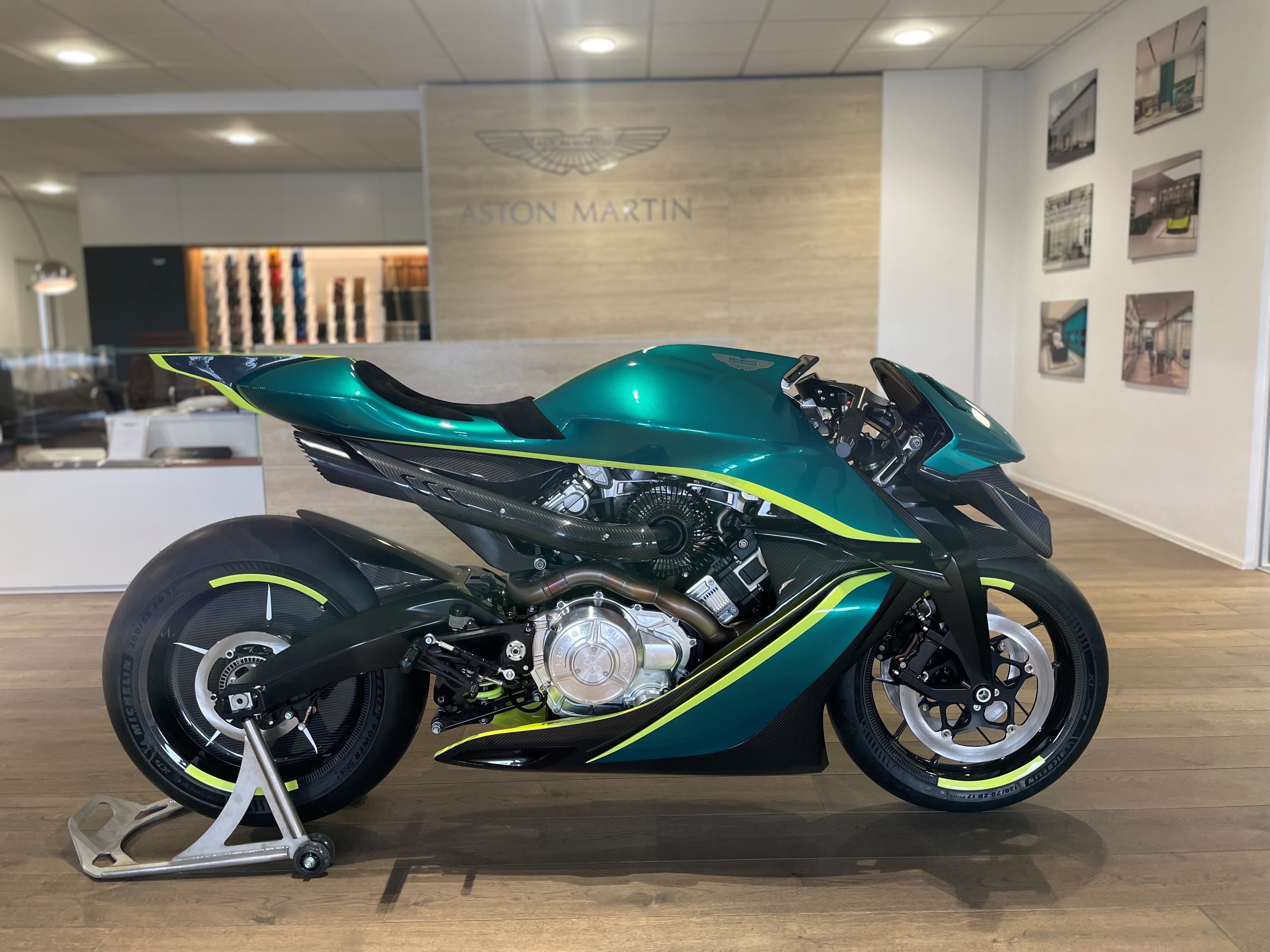
Aston Martin has built a motorcycle. Not a concept, not a design study tucked away in a Gaydon styling studio, but a street-legal, limited-run machine that will be sold to 300 paying customers. The AMB 002 Roadster, developed in partnership with the French specialist Brough Superior, is a 190kg titanium-framed, carbon-tanked, billet-forked projectile that makes roughly 115 horsepower—or, as Car and Driver helpfully framed it, nearly as much as a Mazda MX-5 Miata. It is, by every account, an extraordinary piece of engineering. It is also a symptom of a disease that has been quietly metastasising inside one of Britain's most storied marques for years.
Let's be clear about what Aston Martin is. It is a low-volume sports car manufacturer that has spent the better part of two decades struggling to fund the development of the cars it actually needs to sell: the Vantage, the DB12, the Vanquish, the DBX. The company has cycled through more CEOs than it has launched clean-sheet platforms in the same period. Its Formula 1 team, meanwhile, is finally delivering on track—Fernando Alonso's podiums and the risky mid-season upgrade strategy that Pedro de la Rosa recently called "one of the best moments we've had" are genuine achievements. But F1 success costs money, and Aston Martin has never been a company with money to spare.
The Licensing Department Never Sleeps
Into that gap steps the licensing department. The motorcycle is the purest expression of it, but it is not the first. There have been Aston Martin bicycles, Aston Martin speedboats, Aston Martin helicopters, Aston Martin submarines, Aston Martin apartments in Miami, Aston Martin-branded whisky, and an Aston Martin baby stroller that costs more than most used cars. Each of these ventures trades on the accumulated equity of the DB5, the V8 Vantage, the Le Mans-winning DBR1—a heritage built by engineers and racers, not by brand strategists. Every time the winged badge appears on something that is not an Aston Martin in any meaningful sense, that equity is spent rather than invested.
A Brough Superior in a Savile Row Suit
The motorcycle is a particularly cynical example because it is not even pretending to be an Aston Martin underneath. It is a Brough Superior—a small, boutique French manufacturer with its own history—wearing a grille-shaped headlight and a set of Aston Martin design cues. The engineering is Brough's. The titanium frame is Brough's. The 997cc turbocharged V-twin is Brough's. Aston Martin contributed a badge and, presumably, a licensing fee. For that, 300 buyers will pay a premium that has not been disclosed but can safely be assumed to be north of £100,000. Brough Superior's own equivalent, the AMB 001, started at around €108,000. The 002 will not be cheaper.
None of this is to say the AMB 002 is a bad motorcycle. It is almost certainly a magnificent one—light, fast, beautifully made, and rare enough to appreciate. The problem is not the product. The problem is what the product reveals about the priorities of the company selling it. While Aston Martin's engineers are fighting to keep the Valkyrie AMR-LMH competitive in the hypercar class and its F1 team is losing key personnel to Red Bull—Gianpiero Lambiase's replacement was poached from Aston's own ranks—the marketing department is out there slapping the badge on a two-wheeled trinket for collectors who already own three Astons and want a fourth thing to park next to them.
The Company It Could Be
There is a version of Aston Martin that is a great car company. You can see it in the Vanquish, which Motor1 recently described as "everything a V12 should be," and in the DBX S, which Kelley Blue Book drove and liked. That company makes cars that people want to drive, not just collect. That company does not need to sell motorcycles, bicycles, or submarines to stay solvent. That company, unfortunately, is not the one we have.
The one we have will put its badge on anything. And as long as collectors keep buying, it will keep doing it.